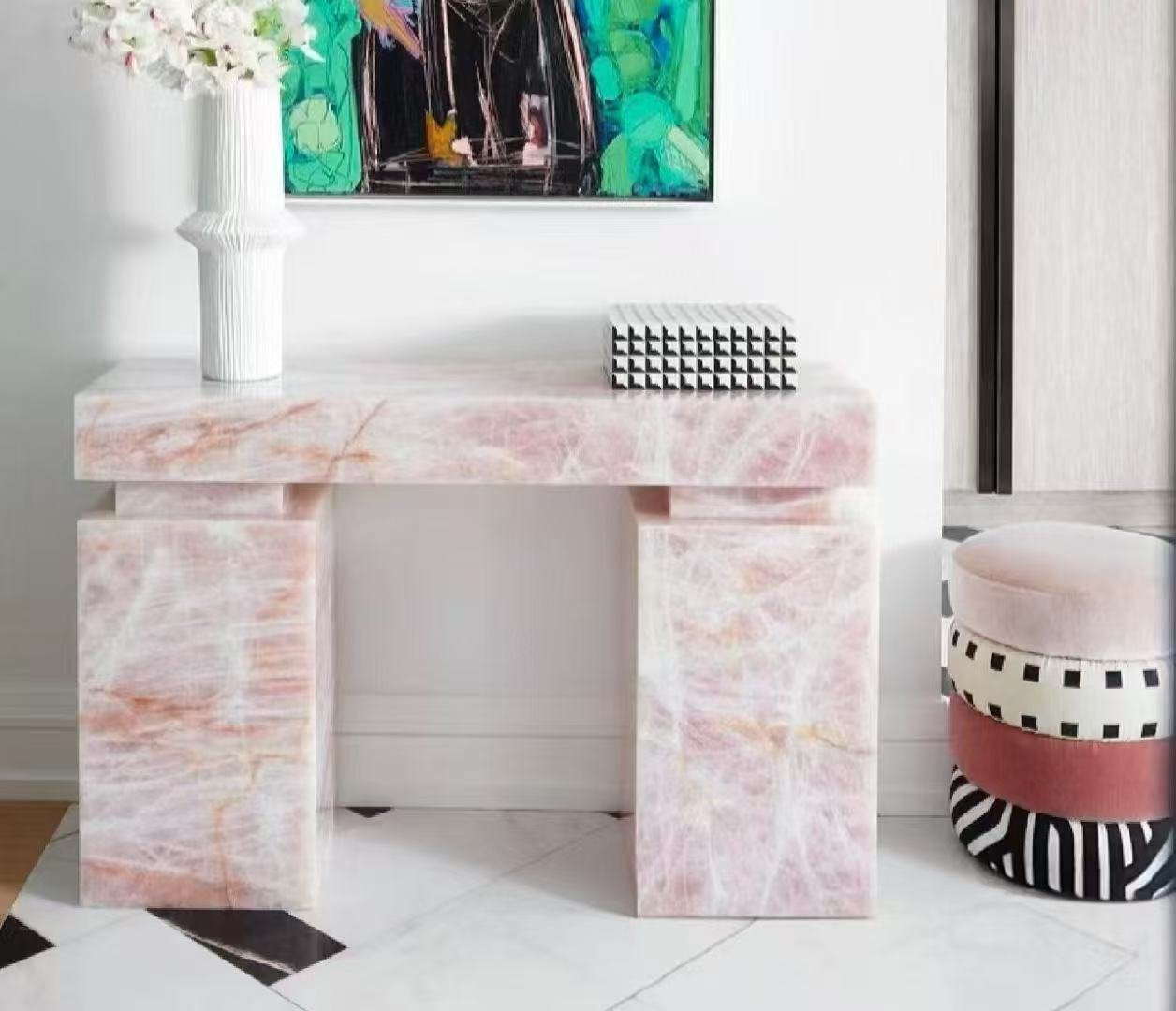
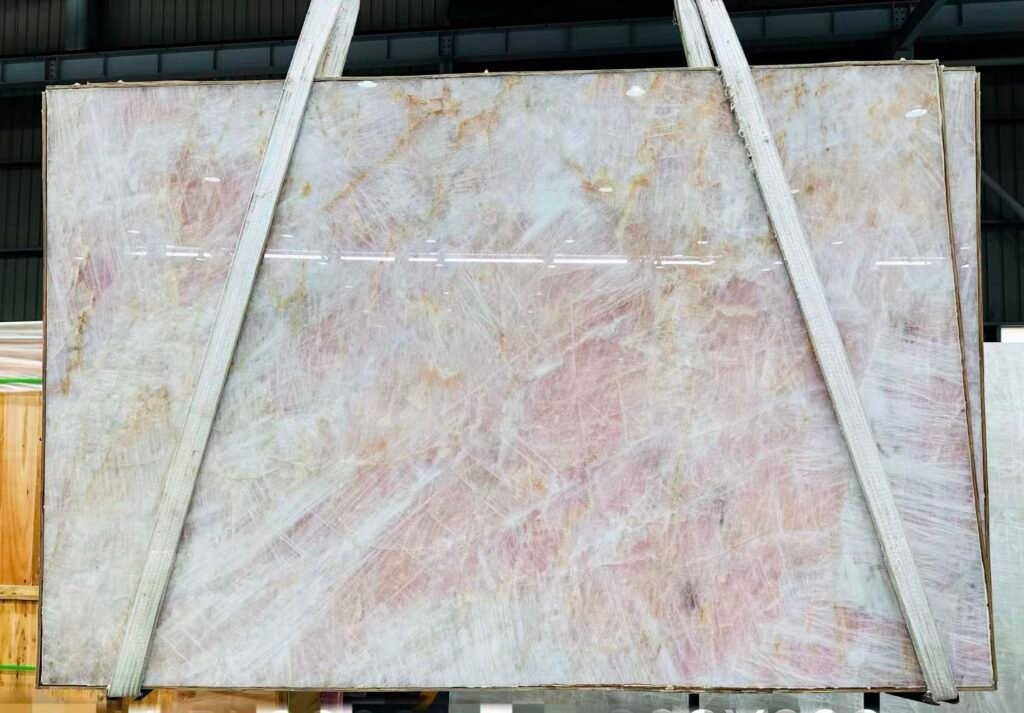
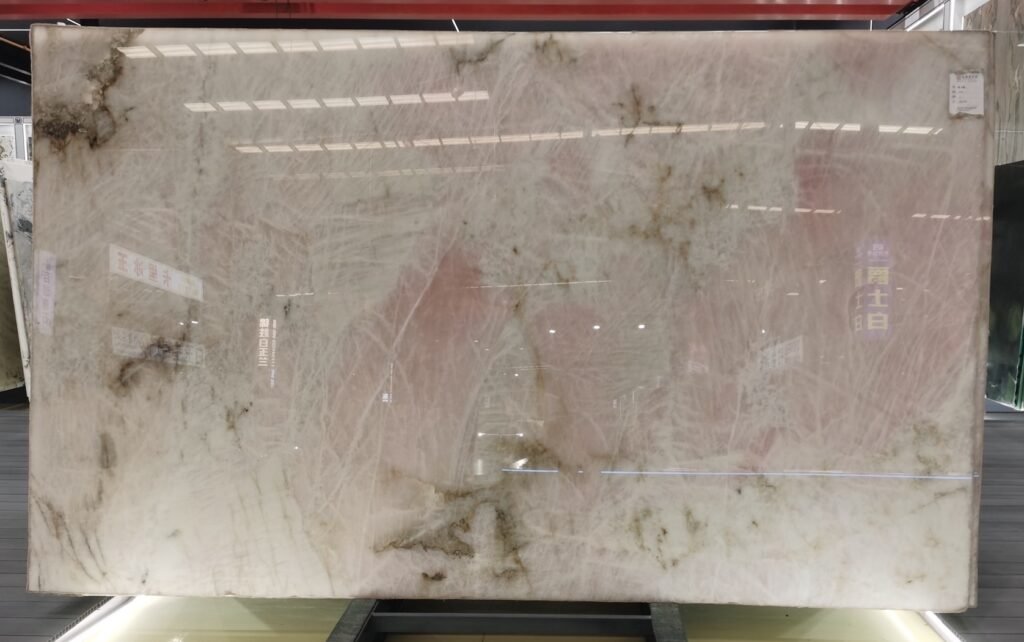
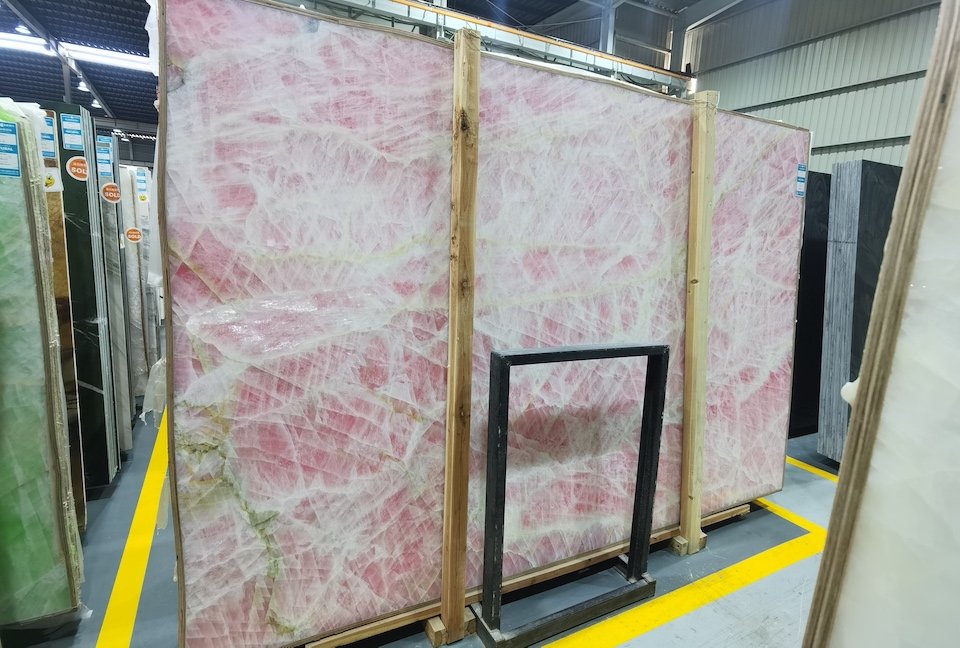
Cristallo Rosa quartzite is often chosen for its soft pink tone and elegant translucency. Yet many clients only realise after slabs arrive or are installed that what they received is not what they expected.
We frequently hear the same concerns from architects, designers, and contractors:
“Why does this Cristallo Rosa look different from the sample?”
“Why is one Cristallo Rosa much cheaper than another?”
“Why does the stone look artificial when backlit?”
The reality is simple: not all Cristallo Rosa is the same. In today’s market, materials sold under this name generally fall into three very different categories. Understanding the difference early can save time, cost, and uncomfortable conversations later.
1. Original Cristallo Rosa Quarry
The original Cristallo Rosa quarry is widely regarded as the reference material in the market.
What clients typically notice:
Soft, natural pink tones integrated within milky white crystals
Fine, delicate crystalline texture rather than bold or blocky patterns
Subtle warm mineral traces that appear organic, not decorative
Even and deep translucency when backlit
This material delivers a calm, refined appearance. Color transitions are smooth and natural, creating confidence that what you specify is exactly what will be installed.
2. Similar Cristallo Rosa Quarry (Natural Alternative)
There is also a second natural quartzite quarry producing a stone often marketed under the same or a similar name.
This is a genuine natural stone, but visually different.
Key differences clients should be aware of:
Stronger, more saturated pink coloration
Larger and more obvious crystal formations
Clearer zoning between pink and white areas
Translucency that may appear less even across the slab
This material can be a good choice when its appearance is clearly understood and approved. Problems only arise when it is sold or specified as the original quarry material.
3. Fake “Cristallo Rosa” (Color‑Backed Imitation)
The biggest risk in the market comes from a fake Cristallo Rosa that is not naturally pink.
This material is produced by applying pink‑colored marble glue to the back of white Cristallo natural stone slabs. When viewed from the front, especially under backlighting, the stone appears pink.
Warning signs:
Pink color looks superficial rather than coming from within the crystal
Strong color when backlit, but flat or unnatural under normal lighting
Uneven translucency across the slab
Color tone may shift or fade over time
While this solution may look appealing in photos, it lacks the authenticity, durability, and long‑term reliability of genuine quartzite — especially for high‑end or backlit applications.
How We Help Clients Avoid These Issues
At GAEA Stone, our role goes beyond supplying slabs. We help clients avoid costly mistakes by making everything clear from the start.
For Cristallo Rosa projects, we:
Clearly explain the quarry origin of each slab
Distinguish between original material and natural alternatives
Refuse artificial color‑backed imitations
Provide slab‑by‑slab photos and visual confirmation before decisions are made
This approach ensures expectations are aligned early — and projects move forward without surprises.
Final Thoughts
Cristallo Rosa is an exceptional quartzite when chosen correctly. Knowing whether you are selecting the original quarry, a natural alternative, or a manufactured imitation makes all the difference.
If you are considering Cristallo Rosa for an upcoming project and want clarity before committing, our team is always happy to share slab photos, origin details, and honest guidance.